
They look alike from the doorway
Mats, leggings, calm voices, a lot of talk about breathing and the core. From the parking lot, Pilates and yoga are the same thing. I run a Pilates studio, so you can guess which one I think is better, but I have practiced both, several of our instructors came to Pilates through yoga, and a good number of our clients keep doing both. So this is not a takedown. It is an attempt to explain what each one actually trains, so you can pick the one your body needs right now.
Where each one comes from
Yoga is thousands of years old and was never primarily about fitness. The physical practice most Americans know, the sequences of standing and seated poses held for breaths at a time, is one branch of a much larger tradition that includes breath work, meditation and a philosophy of how to live. That breadth is its strength. A yoga class can be a workout, a stretch, a nervous system reset, or all three.
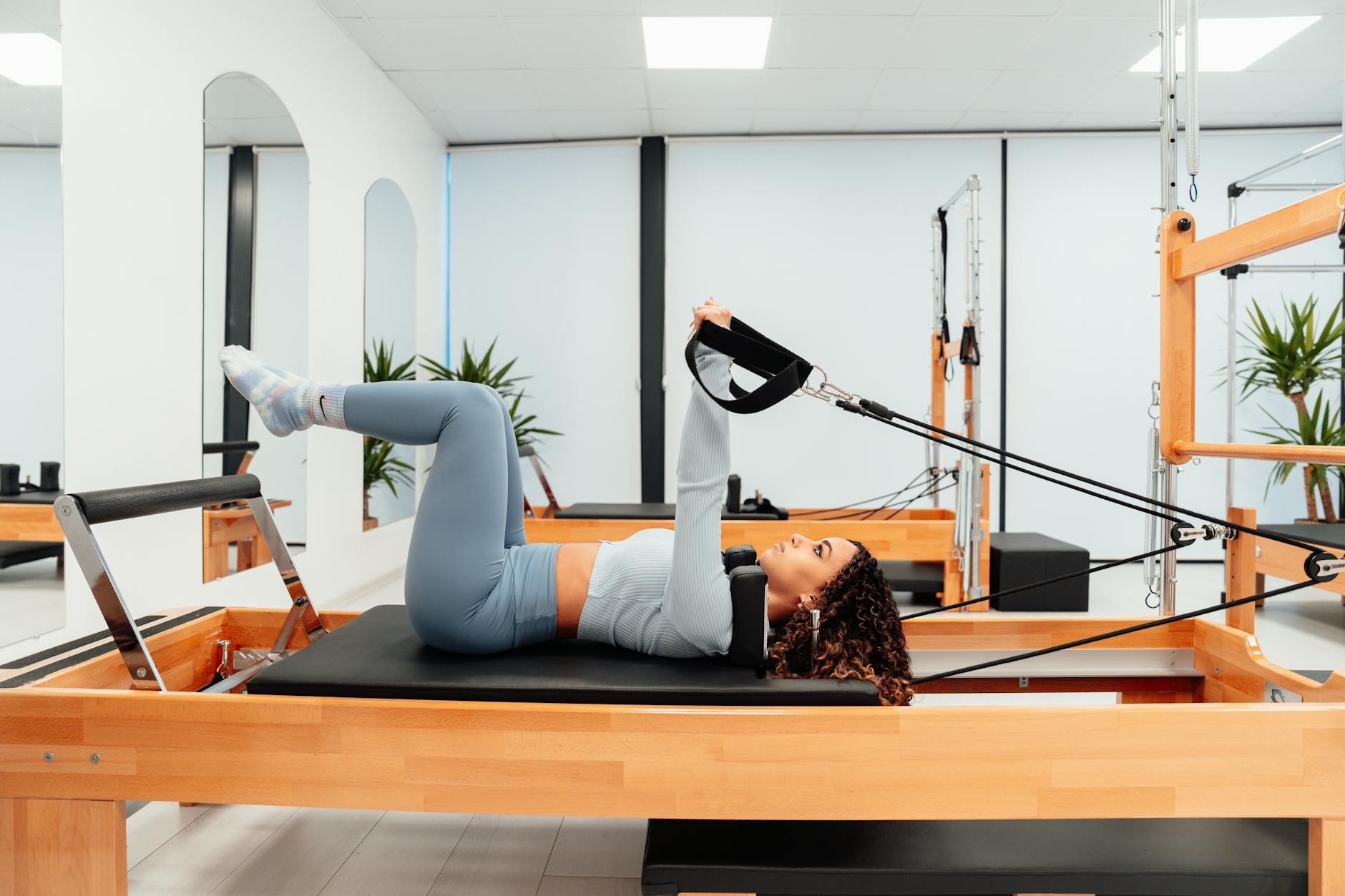
Pilates is about a hundred years old and was built by one man, Joseph Pilates, to rehabilitate injured soldiers and later dancers. He rigged springs to hospital beds so patients could exercise against resistance while lying down. Those bed springs became the Reformer. Everything in Pilates descends from that origin: controlled movement, resistance you can dial up or down, and a relentless focus on the trunk, the pelvis and the shoulder girdle.
What each one trains
Yoga trains flexibility, balance and the ability to hold a position under your own body weight. Many poses take a joint toward the end of its range and ask you to stay there. Done well, it builds real strength in the legs and shoulders and does more for a frantic mind than almost anything else I know.
Pilates trains control. The springs on a Reformer resist you on the way out and assist or resist you on the way back, so you are working through the whole movement rather than holding a shape. The emphasis is on the muscles that stabilize the spine and pelvis, on moving one part of the body while the rest stays quiet, and on doing both sides evenly. On our Konnector-adapted Reformers that last part is enforced by the equipment: each limb gets its own resistance, so a strong side cannot quietly cover for a weak one.
The shortest version I can give you: yoga asks how far you can go. Pilates asks how well you can control what you have.
Who should pick which
Back pain. Pilates, and specifically Pilates with someone qualified watching. Most back pain we see in Plymouth is not a flexibility problem. It is a control problem, a pelvis that tips, a trunk that cannot hold still while the legs move, a hip that stopped doing its share years ago. Deep forward folds and backbends can aggravate exactly that. Spring-assisted work on the Reformer lets you load the spine gently and progressively. If the pain is acute or has a story behind it, our physical therapists work in the same building as the instructors and will tell you which room to start in.
Hypermobile joints. Pilates. If your joints already go further than they should, a practice built around going further is not what you need. You need strength at the end of your range and the control to stop there. We see a lot of former dancers and gymnasts for this reason.
Osteoporosis or low bone density. Pilates with modifications, and ask before you start. Loaded spinal flexion, the rounding forward that shows up in both practices, is the movement to be careful with. On the Reformer we can build bone-loading work around extension and standing exercises and leave the risky shapes out. Our older clients, some in their nineties, are living proof that this works. Pair Pilates with our strength classes to really start building your bones.
Stress, sleep, and a brain that will not switch off. Yoga, honestly. Pilates calms people too, mostly because you cannot think about your inbox while intensely focused on your movement, but yoga was designed for this.
Tight hips and hamstrings with no pain. Either, and probably both. Yoga will lengthen you. Pilates will teach you to use the length. The Pilates equipment will assist your stretches and elongation.
Athletes and runners. Pilates first, for the one-sided strength and the hip control that keeps knees honest, then yoga for recovery. Most of the collegiate athletes who train with us arrived because a coach or a PT told them their core was the weak link.
Equipment changes the answer
Most of the arguments online compare mat Pilates to yoga, and on a mat the two are closer cousins than people think. The gap opens when you add equipment. A Reformer, a Tower, a Chair and a CoreAlign let an instructor make the same exercise easier for the person recovering from a knee replacement and harder for the hockey player next to her. That range is why we run group classes that hold a 70-year-old and a 25-year-old on the same day, and it is why someone who tried mat Pilates once and found it boring often feels completely different on the machine.
The honest answer about doing both
If you have the time and the budget, twice-weekly Pilates plus one yoga class a week is as good a movement week as I can design for most adults. If you only have time for one, choose based on the list above. If you are in pain, start with us, and if you are mostly stressed and stiff, a yoga studio will serve you well. Either way, in a Minnesota January the practice you will actually drive to is the right one.
New clients can try a month of unlimited Pilates Principles classes for $99. Look at the schedule, pick a time you can hold for four weeks, and tell the front desk what hurts.
Frequently asked questions
Is Pilates or yoga better for back pain?
Pilates, in most cases. Back pain is usually a control problem rather than a flexibility problem, and spring-assisted Reformer work lets you strengthen the muscles that stabilize the spine without loading it into deep flexion. At Pilates MN in Plymouth, clients with back pain can start with a physical therapy assessment and move into classes when their therapist and instructor agree they are ready.
Is Pilates or yoga better for losing weight?
Neither is a weight-loss program on its own. Both build muscle and improve how you move, and a stronger body burns more and gets injured less, which is what keeps people exercising. Pair either practice with walking or strength training and sensible eating if weight is the goal.
Which is better for beginners?
Pilates on the Reformer is the more forgiving start, because the springs can assist a movement until you are strong enough to do it unaided. Beginners at our Plymouth studio start in Pilates Principles, a foundation class on the equipment, and move into Reformer 1 when they are ready.
Can I do Pilates and yoga in the same week?
Yes, and many of our clients do. Two Pilates classes and one yoga class a week is a well-rounded plan for most adults. Give yourself a rest day between harder sessions.
How much does Pilates cost compared to yoga?
Equipment Pilates generally costs more per class than a yoga class because the group is smaller and the machines are expensive. At Pilates MN a single class is $40, memberships run $180 to $275 a month, and new clients can take a month of unlimited foundation classes for $99.
How long does it take to see results from Pilates?
Joseph Pilates said you would feel the difference in ten sessions and see it in twenty. That matches what we see: at twice a week, most people move differently inside a month and look different inside three.