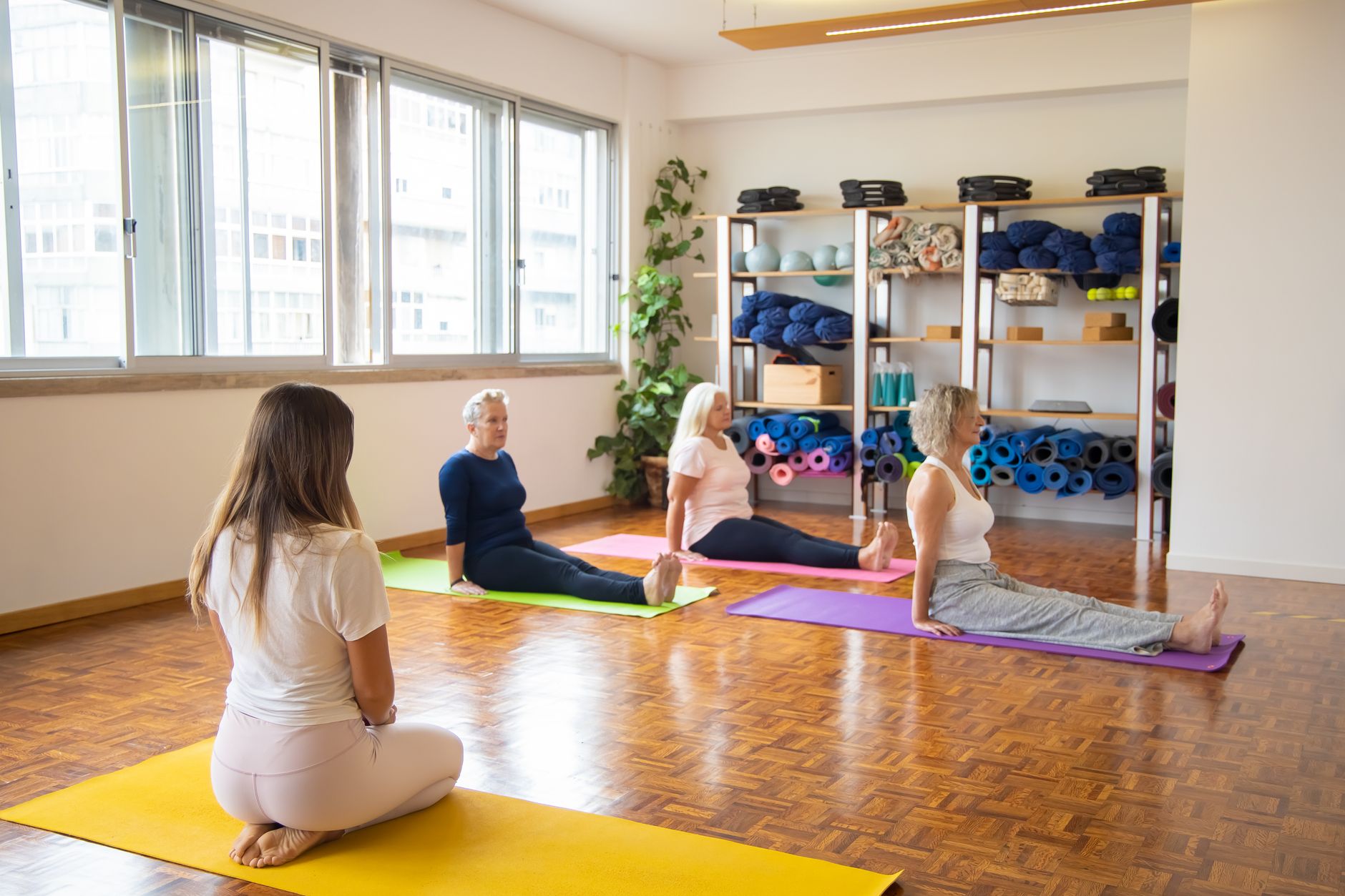
It is not too late, and you will not be the oldest one here
Our oldest clients are in their nineties. People come to us in their sixties and seventies after a knee replacement, a fall, a doctor's warning about balance, or simply a decision that they want to keep doing things without help. So when someone calls the studio and asks, a little nervously, whether they are too old to start Pilates, the answer is easy. They are not, and they will probably meet someone in their first class who is older than they are.
What changes as you get older is not whether Pilates works. It is what you need it to do, and how carefully the first few weeks should be handled.
What Pilates does for an older body
Most of the people over 65 who train with us want the same handful of things, and they are rarely about how they look. Getting up off the floor or out of a low chair without pushing on their knees. Walking on an icy driveway in February without fear. Carrying grandchildren and groceries. Turning to look over a shoulder when backing out of the garage. Standing with better posture than they have had in years.
Pilates is built around those abilities. It strengthens the deep muscles around the trunk and hips, trains balance in a controlled way, keeps joints moving through a full and comfortable range, and asks you to move one side of the body at a time, which shows weaknesses that ordinary life lets you hide. Every exercise can be made easier or harder, so the same session can serve someone who just finished rehab and someone who still hikes every summer.
Why we use the equipment instead of a mat
Mat Pilates means getting down to the floor and back up again, repeatedly, and holding yourself up against gravity the whole time. For many older beginners that is the hardest part of the class, and it is not the point. On a Reformer you lie or sit on a padded carriage and work against springs that can assist you as much as they resist you. The instructor can make the work lighter until you are ready for more, which is how a first session stays safe without being pointless.
Getting on and off the Reformer takes a little practice, and our instructors walk every new client through it. The Chair and the Tower give us seated and standing options. The CoreAlign, a standing unit with two moving carriages, is where we do a lot of balance and walking work, with something to hold onto the entire time. Our studio tour shows all of it if you want to see the equipment before you come in.
Balance is the main event
Falls are the biggest risk to independence later in life, and most of them happen in completely ordinary moments, stepping off a curb, turning too quickly, reaching for something on a high shelf. So we train those moments. Standing on one leg with support. Shifting weight forward and back. Stepping and turning on the CoreAlign. Strengthening the outer hip muscles that steady the pelvis on every step. The goal is a body that catches itself.
If you have Parkinson's, an artificial joint, or a history of falls, tell us before your first session. Our instructors have worked with all three, and some of those clients start with our physical therapists, who work in the same building and teach classes themselves.
How to start well
For most older beginners we suggest one of two routes. If you are generally healthy and active, start with our Pilates Principles foundation class, which teaches the basics on the equipment at a pace built for beginners. If you are coming off surgery, managing a condition, or simply want more attention while you learn, start with a few private sessions and join a group once you feel confident. Either way, tell the front desk what you want to be able to do as well as what hurts. That is the most useful thing a new client can say.
Plan on twice a week. Most people feel steadier within a month and notice everyday things getting easier (stairs, getting in and out of the car) within two to three months. The studio opens at 6:30 on Thursdays and 7 on Tuesdays, with Saturday and Sunday morning hours as well, and the full class schedule is online.
What it costs
New clients can take a month of unlimited Pilates Principles classes for $99. After that, memberships run $180 to $275 a month, a single class is $40, and private sessions with a Pilates trainer are $110. We do not bill insurance or Medicare directly, but HSA and FSA funds can be used where applicable, and our physical therapists provide billing codes if you want to submit for reimbursement.
Frequently asked questions
Is Pilates good for seniors?
Yes. Equipment-based Pilates strengthens the trunk and hips, improves balance and keeps joints moving, all with adjustable spring resistance that can assist as well as challenge. It is one of the most adaptable forms of exercise for people in their 60s, 70s, 80s and beyond.
Am I too old to start Pilates?
Almost certainly not. At Pilates MN in Plymouth, our oldest clients are in their nineties. Starting with a foundation class or a few private sessions lets an instructor adapt the work to your body before you join a regular group.
Is Reformer Pilates safe for older adults?
Generally, yes, and it is often easier than mat Pilates because you work lying or seated on a supported carriage instead of getting up and down from the floor. Tell your instructor about joint replacements, osteoporosis, Parkinson's or a history of falls so the exercises can be adjusted.
How often should seniors do Pilates?
2-3x per week suits most older adults. It is frequent enough to build strength and balance and leaves time to recover. Most people feel steadier within about a month.
How much do Pilates classes cost for seniors in Plymouth, MN?
Pilates MN does not have a separate senior rate. New clients can take a month of unlimited foundation classes for $99, single classes are $40, memberships are $180 to $275 a month, and private sessions start at $110, with discounted new client rates. HSA and FSA funds can be used where applicable.