
Pregnancy changes the plan, and that is normal
Pregnant and postpartum clients ask us two questions more than any others: is Pilates safe right now, and when can I come back after the baby? The honest answer to both depends on your pregnancy and on what your doctor or midwife tells you. What we can do is explain what changes in the body and what we usually adjust on the equipment, so you can start or return at our Plymouth studio without guessing.
This article is general information. It does not replace advice from the provider who is following your pregnancy, and the first step in every case below is getting their clearance.
Start with clearance from your doctor or midwife
Before you begin or continue Pilates while pregnant, ask your doctor or midwife whether exercise is right for you and whether there is anything you should avoid. Most people with an uncomplicated pregnancy are encouraged to stay active, but some conditions call for limits or rest, and only your provider knows your history. Bring their guidance with you and share it with your instructor or therapist before your first session.
After delivery, the same rule applies. Wait until your provider has checked your recovery and cleared you for exercise. That timing often differs after a cesarean birth compared with a vaginal delivery, so we let your provider set the date.
What changes in your body during pregnancy
A few changes affect how you move on the equipment. Hormones loosen ligaments so the pelvis can make room, which can make joints feel less stable than usual. Your center of gravity shifts forward as the baby grows, and your lower back often takes up the slack. The abdominal wall stretches, and the pelvic floor carries more load every week.
None of that means you have to stop moving. It does mean the goals shift. During pregnancy we care less about building new strength and more about keeping the strength you already have, breathing well, staying comfortable and protecting joints that are looser than they were a few months ago.
What we usually adjust while you are pregnant
Every pregnancy is different, and your instructor will adjust to how you feel on the day. These are the changes we make most often:
- Less time lying flat on your back as the pregnancy progresses, with more work done side-lying, seated, kneeling or standing
- Fewer exercises that curl the trunk forward hard, especially if you see doming or bulging along the middle of your belly
- Smaller ranges of motion for stretches, since loose ligaments can let you go further than is good for you
- Lighter or more supportive spring settings, and more care getting on and off the carriage
- Breathing work that coordinates the deep abdominals and pelvic floor instead of bracing hard
Stop and tell your instructor right away if you feel dizzy, if you have pain in your belly or pelvis, or if anything else worries you. Your provider can give you the full list of warning signs to watch for during exercise.
When to start again after the baby
There is no single right week. Many providers do a postpartum check several weeks after delivery, and that visit is usually when people hear whether they are cleared for exercise. Some clients feel ready before they are allowed, while others are cleared and still feel nowhere near ready, and both are normal.
Clearance to exercise is also different from being ready for a full Reformer class. The abdominal wall and pelvic floor need time to reconnect, and broken sleep and feeding a newborn change how much you can recover from. We would rather you come back gradually and keep coming than return to your old class level in week one and have to stop.
What the first weeks back focus on
Early postpartum work is quieter than people expect. A typical starting point covers:
- Breathing patterns that help the deep abdominals and pelvic floor work together again
- Gentle pelvic floor awareness, including learning to relax those muscles as well as contract them
- Checking for separation along the midline of the abdomen and choosing exercises that suit it
- Posture for the hours you now spend lifting and feeding
- Rebuilding hip and glute strength before adding harder trunk work
Leaking when you cough or jump and a feeling of heaviness in the pelvis are both common after birth. Raise them with your provider and with a physical therapist. You do not need to wait for them to go away on their own before asking for help.
Where to start at our studio
For most pregnant and postpartum clients, we suggest starting one-on-one. A physical therapy assessment is the safest first step if you have pain, pelvic floor symptoms, abdominal separation or a complicated delivery. Our physical therapists work with postpartum clients and pelvic floor concerns, and every one of them also teaches Pilates, so treatment can move straight onto the equipment you will use later.
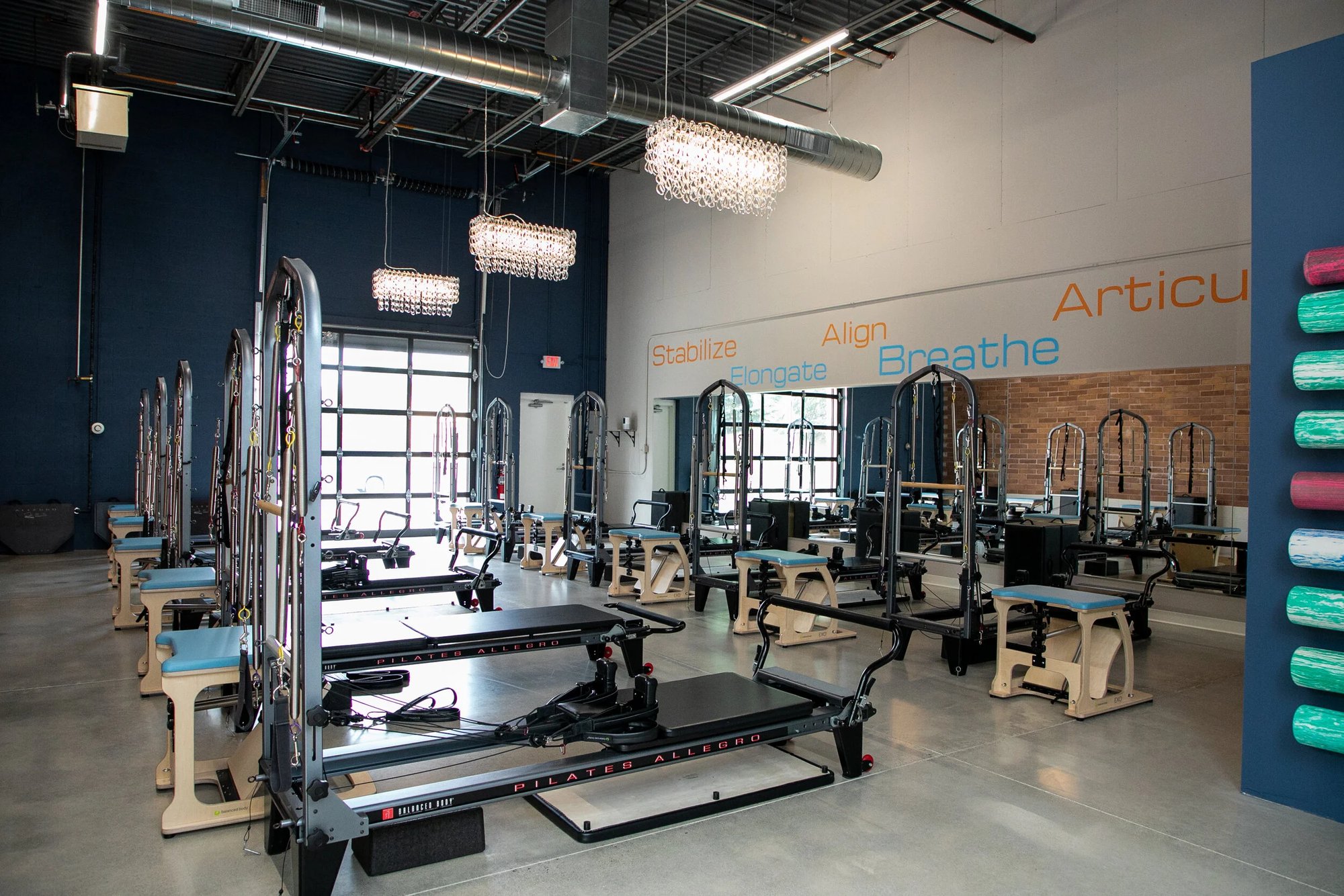
If you feel well and your provider has cleared you, private Pilates sessions are a good way to learn modifications before joining a group. Our Reformers use the Konnector, which puts each arm and leg on its own resistance. That helps if one hip or one side of the pelvis is bothering you, since the comfortable side cannot quietly take over. Once you have the basics, Pilates Principles classes are where most people rejoin the schedule, and your instructor will tell you when moving up a level makes sense.
Because our physical therapists and instructors work in the same building and coordinate, the person teaching you can check with a therapist the same week if something changes during pregnancy or recovery.
What it costs
A physical therapy assessment is $200, and new clients can choose a package of one assessment plus four private sessions for $500. Private Pilates sessions are $110 with a Pilates trainer or $115 with a master trainer. We do not bill insurance, but HSA and FSA funds can be used where they apply, and our physical therapists provide billing codes for possible reimbursement. Everything else is on our pricing page.
Frequently asked questions
Is Pilates safe during pregnancy?
For many people with an uncomplicated pregnancy, Pilates with sensible modifications is a reasonable way to stay active. Get clearance from your doctor or midwife first, and expect exercises to change as the pregnancy progresses.
How soon after giving birth can I start Pilates?
Start after your doctor or midwife has checked your recovery and cleared you for exercise. Timing varies, especially after a cesarean birth. Even after clearance, begin with breathing and pelvic floor work before returning to a full class.
Can Pilates help with abdominal separation after pregnancy?
Pilates-based exercise is often part of rebuilding the abdominal wall after pregnancy, but the right exercises depend on how your separation looks and feels. A physical therapy assessment is the best way to find out what to do and what to avoid.
Where can I find postpartum Pilates and physical therapy in Plymouth, MN?
Pilates MN at 2355 Polaris Lane N in Plymouth, MN has licensed physical therapists who work with postpartum and pelvic floor concerns, alongside Pilates instructors in the same building. Call the front desk to book an assessment or a private session.
How much does a physical therapy assessment cost?
A physical therapy assessment at Pilates MN costs $200. New clients can choose a package of one assessment and four private sessions for $500. The studio does not bill insurance, but HSA and FSA funds can be used where applicable.